Fraunhofer USA Center Mid-Atlantic CMA
Just as Industry 4.0 has transformed manufacturing by embedding digital technologies into every stage of production, so Quality 4.0 has emerged to use smart technologies to improve product quality and manufacturing operations. It integrates real-time, non-destructive process monitoring, edge computing, and advanced analytics, often powered by machine learning (ML) and artificial intelligence (AI), to create a proactive and predictive approach to ensuring product quality. Instead of traditional end-of-line quality inspections, Quality 4.0 shifts the focus to in-line, process-centric quality assurance (QA), leveraging continuous data collection from smart sensors to capture critical process parameters and IIoT devices to monitor manufacturing processes as they unfold. This approach to QA enables manufacturers to detect deviations in products at an early stage in their manufacture, reveal deviations that may not be detectable by standard screening of the final product, deploy AI/ML-based predictive analytics to forecast final product quality and make process adjustments to mitigate arising deviations. The cumulative effect of this approach is to reduce the likelihood of defects and costly rework, more easily identify root causes of product defects, identify high-risk processes requiring intense quality monitoring, and reduce the need for post-production quality assessments. Thus, implementing Quality 4.0 into manufacturing processes leads to major cost savings.
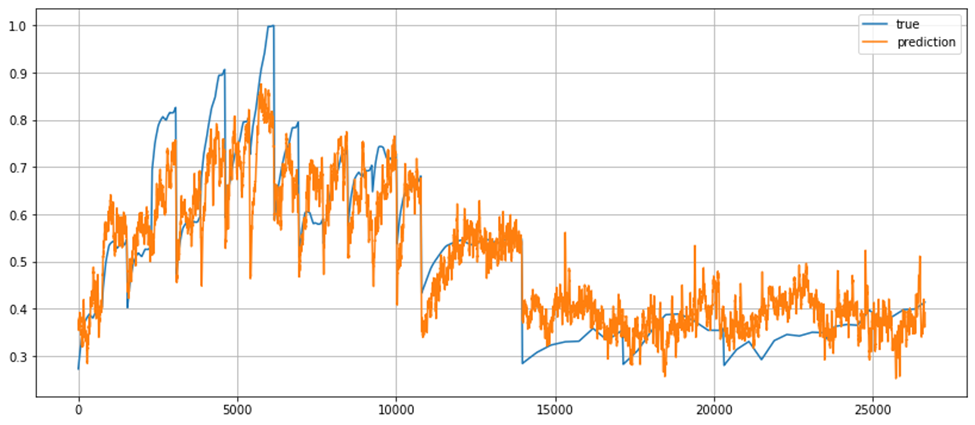
Computer scientists and engineers at Fraunhofer USA CMA have developed ML and AI tools to introduce Quality 4.0 approaches into two welding use cases important in the automotive industry: spot welding and laser welding. Resistance spot welding is widely used to join metal sheets via localized fusion. Fraunhofer USA CMA utilized AI algorithms to analyze large datasets gathered from strategically placed sensors during production, thus identifying patterns, trends and deviations from established norms and predicting final weld strength and bonding quality. By continuously monitoring process parameters in real-time, AI-powered statistical process control (SPC) systems could alert operators to potential quality issues, enabling timely adjustments to prevent defects and optimize production efficiency. This Quality 4.0 approach has been tested with major automotive manufacturers in the U.S. It reduces the cost of manual weld quality verification by up to 55% and can be integrated into existing spot-welding lines with minimal hardware modifications.
In collaboration with their colleagues at the Fraunhofer Institute for Material and Beam Technology IWS in Dresden, Germany, Fraunhofer
USA CMA has also applied Quality 4.0 to high-precision laser welding, which is used across many industries requiring high strength, minimal distortion and fine detail, including the automotive industry. The team deployed a high-speed thermal camera to capture temperature gradients across the weld zone and an acoustic sensor to record emitted ultrasound waves. A system of AI models were developed utilizing different ML architectures that correlated sensor outputs with key weld parameters. This allowed for parameters such as laser power or scanning speed to be tuned on the fly to address detected anomalies, with the number of weld defects reduced by up to 30%. The approaches deployed here by Fraunhofer USA CMA to introduce Quality 4.0 to welding use cases will also be applicable across a very wide variety of other processes and many manufacturing industries.
 Fraunhofer USA Center Mid-Atlantic CMA